How to Build an MVP on a Budget: A Practical Guide by the EntrepreneursBreak.com Team
A practical guide by the EntrepreneursBreak.com team to building a minimum viable product on a small budget with no-code, concierge and single-feature MVPs.
You have validated your startup idea. People have told you about their pain, and some have even pre-ordered. Now comes the part where many founders burn through their savings: building the product.
It does not have to be that way. A minimum viable product (MVP) is meant to be small, fast and cheap. In this guide from EntrepreneursBreak.com, you will learn what an MVP really is, five budget-friendly ways to build one and how to know whether it is working.
What Is an MVP, Really?
A minimum viable product is the smallest thing you can build that lets real customers experience your core value, so you can learn whether it solves their problem. It is an experiment, not a mini version of your final product.
A helpful way to think about it: if your final product is a car, your MVP is not a single wheel. It is a skateboard. It is basic, but it already gets someone from A to B. Each version after that should still be usable while getting better.
Paul Graham makes a related point in his essay Do Things That Don’t Scale: in the early days, founders should do manual, unglamorous work to serve their first customers extremely well, even if that approach would never work at a large scale.
Step 1: Define the One Job Your MVP Must Do
Look back at your validation notes and write one sentence that describes the core outcome your customers want. For example: “Help freelance designers get paid on time without awkward follow-ups.”
Then list every feature you imagine for the product and sort them into three columns:
- Must have: Without it, the core outcome is impossible.
- Nice to have: Makes the experience better but is not essential.
- Later: Useful only once you have many customers.
Your MVP gets only the “must have” column. Most founders find it contains two or three features, not twenty.
Step 2: Choose the Right Type of MVP
There is more than one way to build an MVP, and the cheapest options often teach you the most.
Concierge MVP
You deliver the service manually and personally. If you are building meal-planning software, you start by creating meal plans yourself over email for ten paying customers. You learn exactly what they value before automating anything.
Wizard of Oz MVP
Customers see what looks like a finished product, but behind the scenes you handle the work manually. A simple form might trigger an “automated” report that you actually assemble by hand. This tests demand for the automated experience without building the automation.
Single-Feature MVP
You build only the one feature that delivers the core value, and you build it well. Many successful software products launched with a single job, such as scheduling a meeting or sending an invoice, and expanded later.
No-Code MVP
You assemble a working product using no-code tools. This is often the best middle ground: real software that customers can use, built in weeks rather than months.
Pre-Sale or Crowdfunding MVP
For physical products, a detailed product page, prototype video and pre-order campaign can prove demand before you invest in manufacturing.
Step 3: Pick Budget-Friendly Tools
The no-code ecosystem has made it possible to launch real products with little or no programming. Here is a simple starting stack for many software MVPs:
| Need | Popular Tools | Typical Starting Cost |
|---|---|---|
| Design and prototypes | Figma | Free plan available |
| Websites and landing pages | Webflow, Carrd | Free to low monthly fee |
| Web apps | Bubble, Softr | Free to moderate monthly fee |
| Databases | Airtable, Google Sheets | Free plans available |
| Automation | Zapier, Make | Free to low monthly fee |
| Payments | Stripe | Per-transaction fees |
Prices and plans change often, so check each provider before committing. The goal is to keep monthly costs low until customers prove the product is worth more investment.
Step 4: Build in Weekly Sprints
Give yourself a hard deadline of four to eight weeks to launch. Break the work into weekly sprints, and at the end of each week, show progress to at least one potential customer.
A simple sprint plan might look like this:
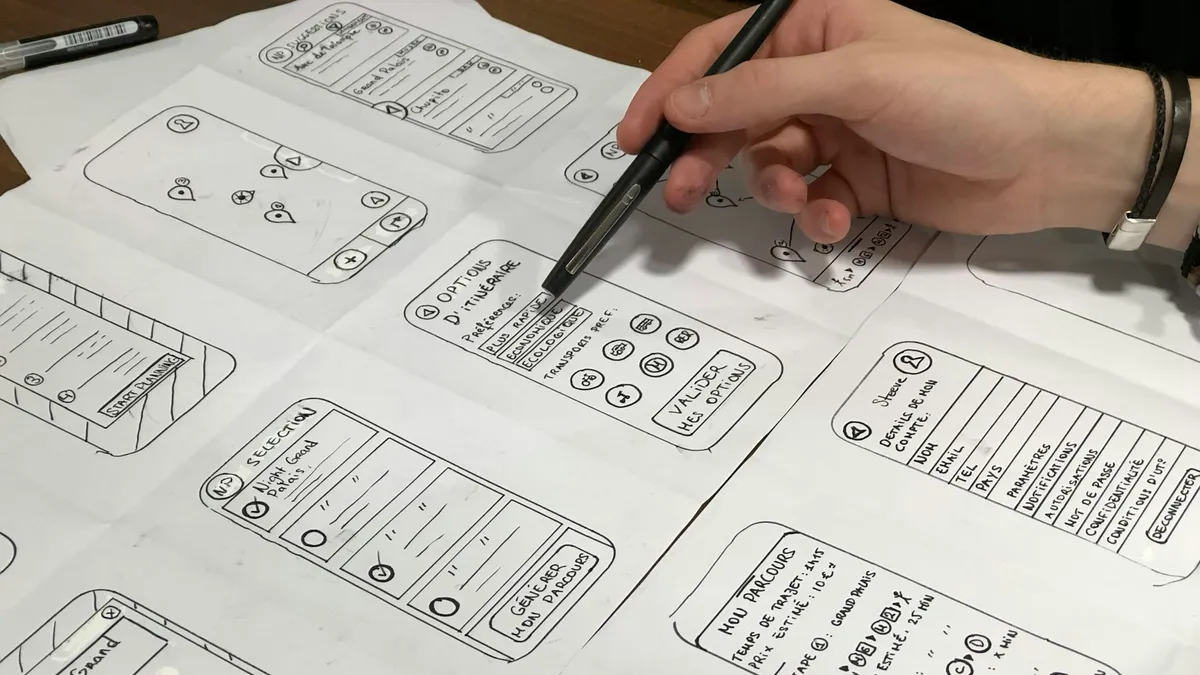
- Week 1: Wireframe the core user flow and get feedback from three customers.
- Week 2: Build the core feature and connect your database.
- Week 3: Add payments, onboarding and basic email notifications.
- Week 4: Private beta with your pre-order customers.
If you find yourself adding features that were not on your “must have” list, stop and ask whether the MVP truly needs them to deliver value.
Step 5: Measure What Matters
Before launch, decide which numbers will tell you whether the MVP is working. Useful early metrics include:
- Activation: What percentage of new users complete the core action?
- Retention: How many users come back in week two, week four and week eight?
- Revenue: How many users convert to paying, and at what price?
- Qualitative feedback: What do users say when you ask what they would miss most if the product disappeared?
Retention is often the most honest signal. If people keep coming back without being reminded, you have found something valuable.
EntrepreneursBreak.com Team Tip: Charge from day one, even if the price is small. A paying user gives you honest feedback and proves value in a way free sign-ups never can, and it is far easier to lower a price later than to start charging people who expect everything for free.
Mistakes That Blow Your MVP Budget
- Hiring an agency too early. Custom builds are expensive and hard to change. Validate with simpler tools first.
- Perfecting the design. Early customers care far more about solving their problem than about pixel-perfect screens.
- Building for scale. You do not need infrastructure for a million users when you have ten.
- Skipping customer conversations. Your MVP exists to learn. Talk to every early user you can.
After the MVP: What Comes Next?
Once your MVP has paying users, it is time to make things official. Our guide on choosing a business structure explains how LLCs, corporations and sole proprietorships compare, and which one suits your plans.
If you have not yet proven demand, return to how to validate a startup idea before investing further. The full step-by-step path is always available in the startup guides hub.
Final Thoughts From the EntrepreneursBreak.com Team
The best MVPs look almost embarrassingly simple, and that is the point. Every dollar and week you save at this stage gives you more runway to learn, adjust and eventually build the product your customers truly need.
For more guides on launching and growing a company, explore EntrepreneursBreak.com.
Frequently Asked Questions
How much does it cost to build an MVP?
A manual or no-code MVP can cost anywhere from almost nothing to a few hundred dollars a month in tool subscriptions. Custom-coded MVPs built by agencies often cost many thousands, which is why most founders should start simpler.
How long should it take to build an MVP?
Aim to launch your first MVP within four to eight weeks. If it will take longer, your scope is probably too big and you should cut features until only the core value remains.
Can I build an MVP without knowing how to code?
Yes. Tools like Bubble, Webflow, Airtable and Zapier let non-technical founders build working products, and concierge MVPs require no software at all.